
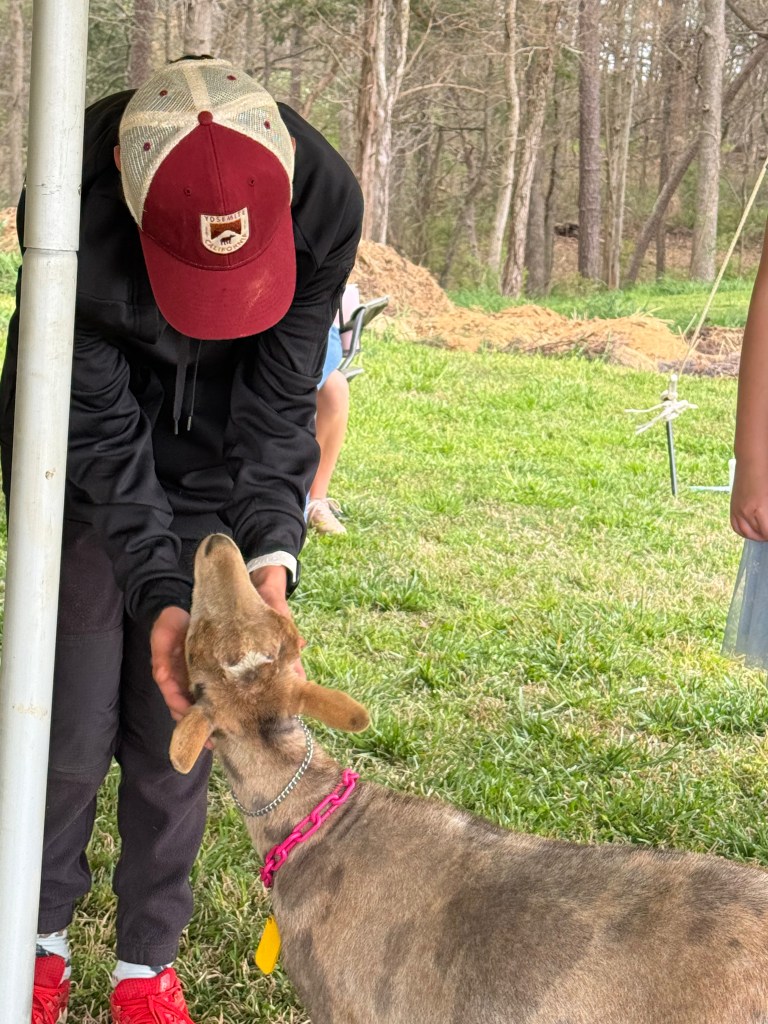
YORK On Sunday, March 30th, there was a dairy goat clinic at
Follow Me Farm and Land Design Services owned by Nancy and Clark Curry. The clinic was hosted and organized by the Pumpkin Pie 4-H Dairy Goat Club and their leader, Olivia Valentine.
Participants learned from American Dairy Goat Association (ADGA) judge Will Pearson, who has an amazing story on how he got into showing and judging dairy goats. First off, the clinic was great and some Seniors got more experience and had their questions answered, and many Juniors and Cloverbuds got to practice or get a starter taste of showing and learn the basics of it. Participants learned about the parts of the goat, how to show your goat, how to answer the judge’s questions, and what judges look for in exhibitors and goats.
Most people think of dairy goats for milk which is one reason Mr. Pearson got his first goat when he was a young boy in 1978. He had gotten Rocky Mountain Spotted Fever (RMSF), a serious bacterial infection transmitted through tick bites, but he was not properly diagnosed for a few weeks. The only thing he was able to digest was goat milk, so his parents decided to get him a goat to milk for himself. Once recovered, as his herd grew, he got into showing and, years later, judging.
Mr. Pearson’s herd kept growing as he grew up, and from 1978 to now he has bred and raised 96 permanent champions, which are goats that have won Grand Champion at least three times in specific qualifying shows. According to Mr. Pearson himself, he likes to see enthusiasm, confidence, and respectful assertiveness in exhibitors. In his words, “the biggest put down for an exhibitor is discourtesy towards another shower.”
The example he talked about was rudeness or rude comments on another shower’s goat. He was adamantly clear that all goats are winners and losers and that, other than something he’d have to disqualify for, there is no put down or big flaw in any goat as they may be the best in the class of not-so-great goats or the best in the class of beautiful national champions.
He’s judged nationals a few times, and mostly other than showing up with the goat, the second most important thing is the communication between the exhibitor and the judge: he wants to see someone who’s not afraid to tell him their answer. Whether right or not, the confidence is most important.
 The York County Current